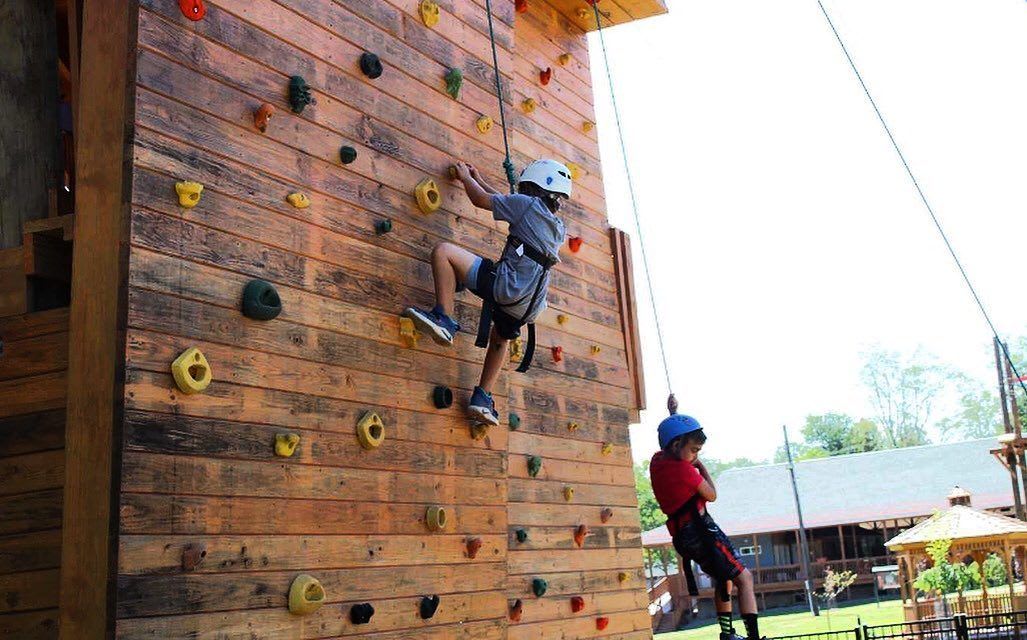

Camp Chipinaw
New York, United States
- Gender
- Coed
- Stay
- Overnight camp
- Ages
- 7 - 16 yrs
- Staff to camper
Field Guide
Summer camp in New York
A field guide to what a camp summer looks like in New York: the forms it takes, how the landscape and climate shape it, and what it asks of a family.
Field notes
Weather in New York
New York does not have a single summer. The coast and the city run warm and humid, with a sea breeze near the water and thunderstorms on the hot afternoons, while the Adirondacks and Catskills give milder days and nights that turn cool, and mountain lakes that stay cold enough to keep a swim short and bracing. Early in the season the high country near still water means black flies and mosquitoes. The figures below are air temperatures for a representative downstate season; the interior and the elevations run cooler, especially after dark.
camp season (June-August (representative core camp season)) runs highs of 78-84°F (26-29°C) and lows of 62-69°F (17-21°C).
Getting there in New York
Downstate, the coast and the city are served by John F. Kennedy International (JFK) and LaGuardia (LGA), with Newark Liberty (EWR) across the line also in reach of the metro. For the mountain resident camps, Albany International (ALB) is the practical gateway, Syracuse (SYR) opens the Finger Lakes and the central interior, and a small commercial field, Adirondack Regional (SLK), sits inside the Park itself with limited service.
From the coast and the city, most day camps are close to where families already live, so getting there is barely a journey at all. Reaching the mountains is the real drive: from Albany the Northway runs north into the Adirondacks and the Thruway runs west toward the lakes, and from the metro the Catskills mean leaving the interstate for progressively smaller roads before a final approach on narrow lake lanes. There is no fly-in-only country here, the camp belts are road-served, just at distance. Anything to do with pickups, shuttles, or timing is best confirmed directly with the camp.
The Parent Side Quest in New York
Whether camp in New York asks much of a parent depends entirely on which kind it is. Along the coast and in the city there is almost nothing to manage: a child leaves in the morning and is home by evening, the daily loop is the whole of the contact, and the waiting town is just the block you already live on. In the mountain camps it is the older shape, a stretch of weeks apart, a visiting day to build the summer around, and letters and whatever calls a given camp allows standing in for the everyday.
The camp towns up north do come alive around visiting weekends, with rooms and tables filling as families arrive, though that runs together with ordinary mountain tourism more than it forms a separate world for camp parents. Either way, the parent's side of camp, the waiting, the letters, the drive home with an emptier back seat, is its own experience and not a footnote to the child's. The [Parent Side Quest](/field-guide/parent-side-quest) is the part of the Field Guide devoted to exactly that.
Disclaimer & Safety
General information:
This content is for informational purposes only and reflects market observations and publicly available sources. Kampspire is an independent platform and does not provide medical, legal, psychological, safety, travel, or professional advisory services.
Safety & oversight:
Camp programs operate within local health, safety, and child-care frameworks that vary by region. Because these standards are set and enforced locally, families should consult the camp directly and relevant local authorities for the most current information on safety practices and supervision.
Our role:
Kampspire does not verify, monitor, or evaluate compliance with these standards. Program details, pricing, policies, and availability are determined by individual providers and must be confirmed directly with them.