Home
    Camps in New York
    Brant Lake Camp
    Camp cover
    Brant Lake Camp logo

    Brant Lake Camp

    New York, United States
    Camp starts in 8 weeks
    Gender

    All boys

    Stay

    Overnight camp

    Ages

    7 - 15 yrs

    Staff ratio

    TBC

    About our camp

    Located in the Adirondack Mountains, Brant Lake Camp is a place where “sports are done right”. It celebrated its 100th anniversary in 2016 and proudly welcomes boys, aged 7-15, to spend a fun, safe and carefree summer. BLC’s approach to camping is highlighted by their Key Staff, the Mini-Camp System and the Unique “Hybrid” System of Counselor Utilization. Brant Lake Camp for the large part owns its long-term success to 30 experienced key staff members who supervise campers and play leadership roles. The Mini-Camp system involves Junior, Intermediate and Senior Camps to make sure everything boys do is age appropriate – from bedtime to facilities they use. To create the best possible experience, staff at Brant Lake Camp always has a mix of professional coaches who provide specialized trainings and friendly counselors who live with boys in their cabins. Having spent 25 years with Brant Lake, Chef Abu makes sure everyone enjoys nutritious and healthy meals to gain enough energy for all of the activities throughout the day.

    Our programs

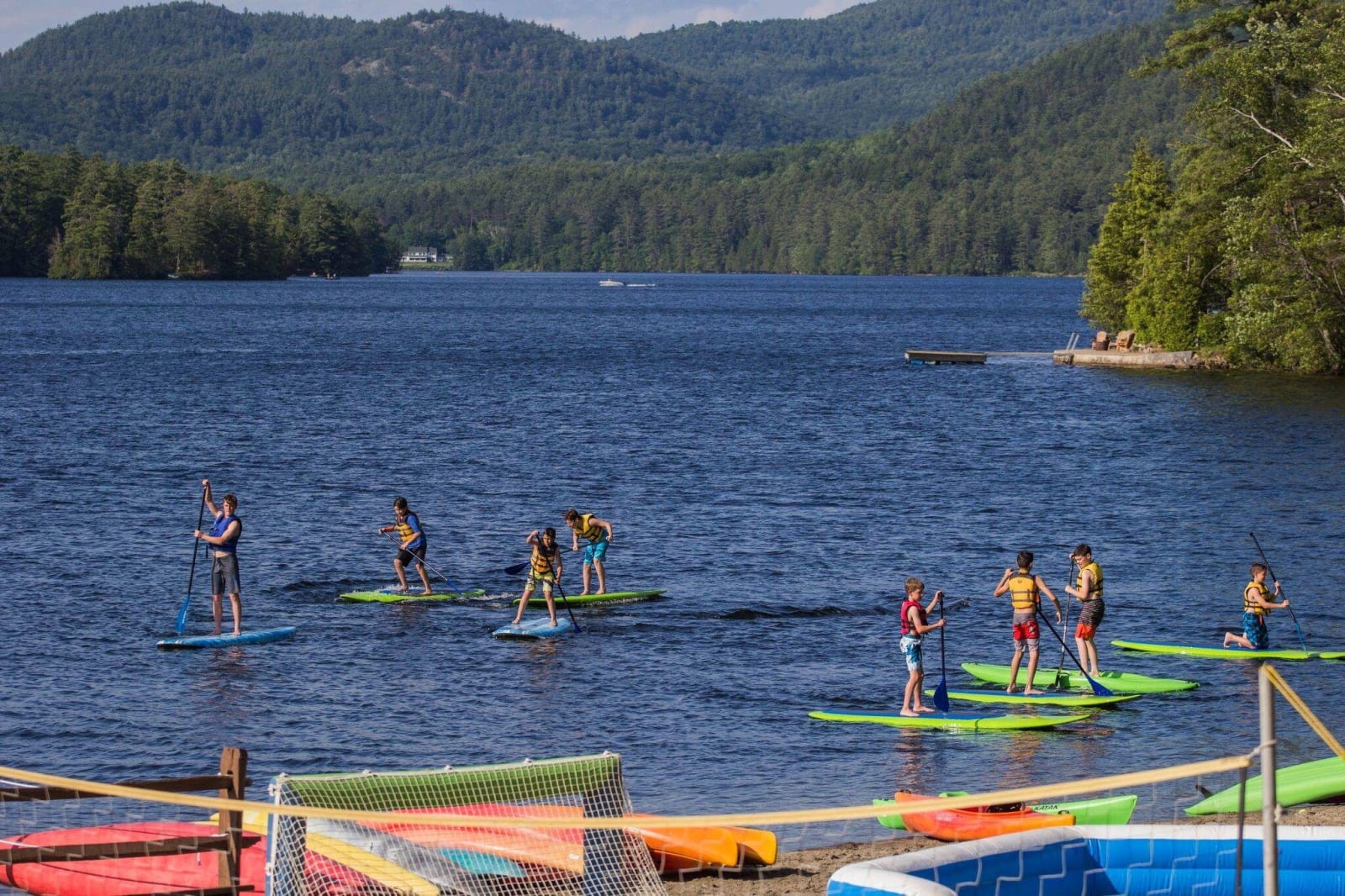
    The core sports Brant Camp offers are basketball, baseball, tennis and soccer. The instruction provided in these sports equals to one in specialty camps. Optional sports programs include golf, lacrosse, roller and ice hockey. Intermediate and Senior groups can also enjoy waterfront activities such as swimming, sailing, kayaking, water-skiing, etc. By the way, boys are given the freedom to select the activities they are most interested in. Mountain biking, fitness, performing arts, hiking, trips and dozens of other activities are on the list to choose from.

    We offer over 12 activities here are a few:

    AthleticsAthletics
    GolfGolf
    HikingHiking
    Instrumental musicInstrumental music
    KayakingKayaking
    LacrosseLacrosse

    Session overview

    Camp season
    27 Jun - 14 Aug 2026
    Program profile
    4 sessions · Overnight
    Rates & Stays
    Planning Estimate
    Day session
    Average daily tuition
    N/A
    Overnight session
    Average daily tuition
    from $333 USD

    Program-specific tuition options

    This camp may offer session-specific tuition structures, including variations by length of stay, enrollment timing, or payment schedule. Families should confirm details directly with the provider.

    Daily figures are calculated from standard tuition and shown as a planning reference only.

    This estimate helps families understand the overall scale of commitment across stay options. Final tuition, inclusions, discounts, and payment structures vary by session and are confirmed directly with the camp.

    Upcoming sessions:

    Where this camp is located

    Brant, New York, United States

    7586 State Route 8Brant, New York, United States

    Explore the New York camp system

    Camps in New York operate within a broader regional system shaped by geography, climate, infrastructure, and local traditions. Explore how these factors influence daily camp life across the area.

    Quick resources:
    Learn more about New York

    Explore the New York camp system

    Camps in New York operate within a broader regional system shaped by geography, climate, infrastructure, and local traditions. Explore how these factors influence daily camp life across the area.

    The Parent Side Quest in New York

    The parallel experience that unfolds outside the camp system

    The parent-adjacent layer in New York is defined by the resort-and-retreat hospitality corridors that bracket the state’s primary camp zones.

    During session transitions, towns like Lake George, Saratoga Springs, and Rhinebeck experience a surge of visitors who occupy a parallel economy of boutique shopping and culinary tourism. This waiting rhythm is expressed through the shift from the high-stress pace of the city to the slower cycle of the mountain regions. Parents often occupy historic hotels where the sight of sunset over the Palisades provides a sensory mirror to the camp environment.

    This parallel world is marked by the availability of farm-to-table dining and the timing of local art festivals. The geographic load of the transition window surfaces as high demand for local lodging and the crowding of village centers during drop-off and pick-up weekends. This experience is held in the quiet streets of Cooperstown or the busy docks of the Thousand Islands.

    Local shops stock extra bug spray and sunblock.

    The rhythm of the side quest is dictated by the constraints of the regional landscape. In the Hudson Valley, the experience is carried by the sound of the train line and the sight of antique markets. In the Adirondacks, it surfaces as the culture of the mountain guide and the aesthetic of the wooden speedboat. This layer is not an operational extension but a parallel high-volume economy that exists within the same high-thermal summer window.

    Transition friction for parents surfaces as the logistical challenge of navigating rural road networks during peak summer traffic. This becomes visible through the accumulation of vehicles at popular trailhead parking lots and the increased wait times at regional restaurants. The structural stability of this layer is expressed through the seasonal activation of secondary hospitality staff and the opening of seasonal farmers markets that serve the influx of visitors.

    high occupancy of historic hotels in mountain corridors.

    increased seasonal staffing in regional hospitality centers.

    activation of seasonal farmers markets near camp hubs.

    the smell of manicured turf and the heavy heat of the Susquehanna valley in mid-July.

    New York weather patterns

    A parent watches a bank of clouds gather over a glacial lake in the Adirondacks as the humid morning air begins to move. The environment is shaped by a complex geography of mountain ranges, deep river valleys, and significant maritime influence. Weather patterns are frequently driven by the collision of moist Atlantic air and cooler systems moving in from the Great Lakes.

    Thermal System

    Temperatures vary significantly between the humid coastal lowlands and the cooler upland plateaus. Inland valleys can experience high thermal peaks during the day, while mountainous regions offer immediate relief through elevation and dense forest cover. Nighttime cooling is efficient in the north, whereas coastal and urban areas retain heat longer due to higher humidity.

    Elevationbased thermal relief

    Maritime temperature stabilization

    Variable diurnal ranges

    The bracing chill of a mountain lake at dawn.

    Moisture System

    Atmospheric moisture is a defining feature, leading to heavy morning dew and frequent valley fog. The state receives consistent precipitation from both frontal systems and localized afternoon thunderstorms that develop over high terrain. The lush, deciduous forest floors and damp soil keep ambient humidity levels high throughout the summer.

    Consistent high ambient humidity

    Frequent orographic precipitation

    High forest floor moisture retention

    The cool dampness of a hemlockshaded trail.

    Sun Exposure

    Solar radiation is intense during peak hours, though frequently filtered by mountain clouds or summer haze. The expansive forest canopy across the state provides significant protection, creating large zones of deep, reliable shade. On the shores of the Great Lakes or the Atlantic, reflective light increases the total UV load significantly.

    Hazediffused UV peaks

    Extensive deciduous canopy shade

    Watersurface light reflection

    The warmth of sundrenched pine needles in a clearing.

    Rapid weather transitions and high ambient humidity represent the primary environmental constraints.

    This content is provided for general informational purposes only and reflects market observations and publicly available sources. Kampspire is an independent information platform and does not provide medical, legal, psychological, safety, travel, or professional advisory services. Program details, supervision practices, safety protocols, pricing, availability, and policies are determined by individual providers and should be confirmed directly with them.

    New York travel context

    Arrival at JFK, LGA, or EWR involves a transition through high density terminal complexes into the complex transit web of the Northeast corridor. Travelers move from the coastal humidity of the Atlantic toward the varied geography of the interior. The landscape shifts from the vertical urban density of the five boroughs into the rugged granite peaks of the Adirondacks, the deep glacial troughs of the Finger Lakes, or the rolling Catskill highlands.

    John F. Kennedy International Airport (JFK)

    The facility functions as a massive multi terminal hub connected by the automated AirTrain system. Staging for camp arrivals is highly regulated and typically occurs at designated 'Federal Circle' transit points or specific terminal commercial lanes. The environment is characterized by intense passenger volume and a complex multi terminal layout that requires significant lead time for ground transit connections.

    Distributed multi terminal hub

    Automated AirTrain linkage

    High volume international staging

    The rhythmic mechanical hum of the AirTrain crossing the Van Wyck Expressway.

    Transit corridor

    Transit utilizes the I 87 (Thruway) or I 81 corridors, serving as the primary north south spines. These roadways transition from multi lane tollways into forest lined highways that track the Hudson River or the Appalachian ridges. As transit moves into the Adirondack Park or the Catskills, the infrastructure involves significant vertical gain and narrow, winding state routes characterized by rock cuts and frequent waterway crossings.

    River valley and mountain navigation

    Extensive electronic tolling network

    The steady, low frequency vibration of the mountain grade asphalt.

    The primary friction point is the extreme traffic volatility at the bridge and tunnel crossings exiting the New York City metropolitan area.

    This content is provided for general informational purposes only and reflects market observations and publicly available sources. Kampspire is an independent information platform and does not provide medical, legal, psychological, safety, travel, or professional advisory services. Program details, supervision practices, safety protocols, pricing, availability, and policies are determined by individual providers and should be confirmed directly with them.

    Disclaimer: This content is for general informational purposes only. Kampspire does not verify provider compliance, safety standards, or site-wide data accuracy; all details and policies must be confirmed directly with the source. Refer to ourFull Terms.

    Kampspire Logo

    Established 2011

    General

    • Home
    • Add My Camp
    • Help

    Popular locations

    • New York
    • Pennsylvania
    • Maine
    • California
    • Alberta

    Understand camp

    • Camp Ready
    • How to choose a camp
    • Field Guide
    • Global camp system
    • Camp Archetypes
    • Archetype home
    • Civic integration hubs
    • Discovery hubs
    • Immersive legacy habitats
    • Mastery foundations

    Explore camp systems

    USA

    • New York
    • Pennsylvania
    • Maine
    • California
    • Wisconsin
    • North Carolina
    • New Hampshire
    • Michigan
    • Colorado
    • Massachusetts
    • View all

    Canada

    • Ontario
    • Quebec
    • British Columbia
    • Alberta
    • Manitoba
    • Saskatchewan
    • Nova Scotia
    • New Brunswick
    • Newfoundland
    • Prince Edward Island
    • View all

    © 2026 ®

    ·
    Terms ·Privacy ·Sitemap