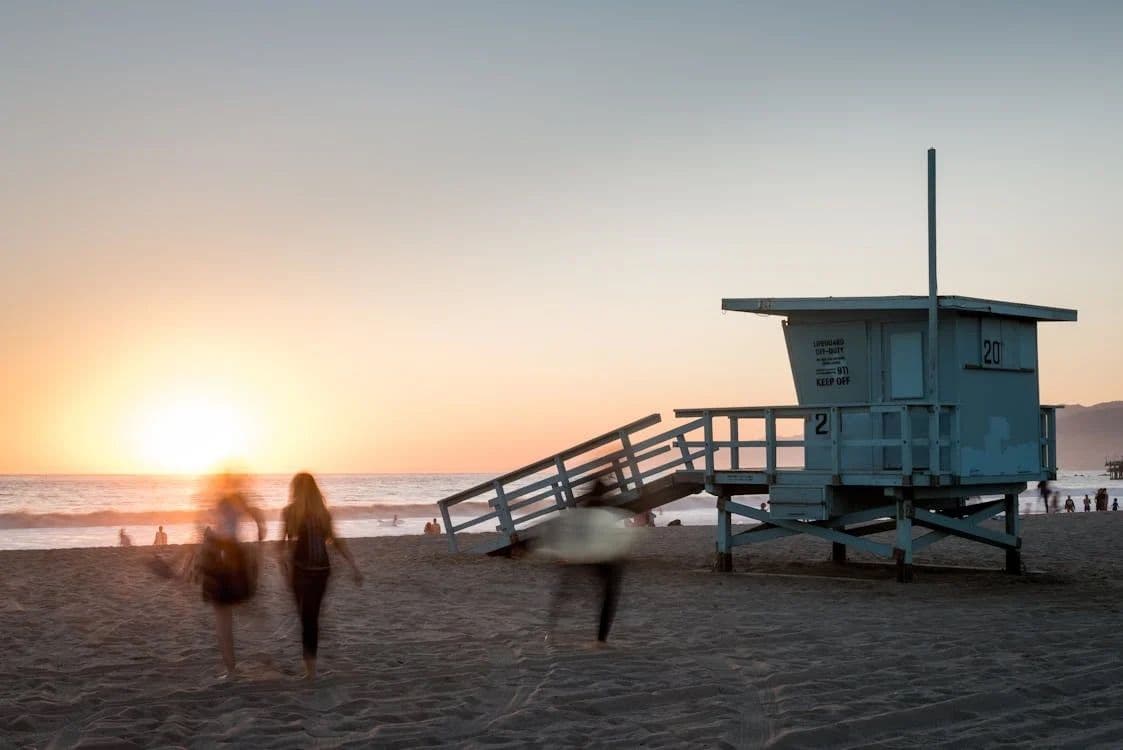
Some mornings near the coast the marine layer settles low and gray over the water, and the day starts cool and unhurried, while just inland the valley is already bright and tilting toward real heat. Camp in this state lives inside that split. The word covers a swimmer zipping into a wetsuit under fog, a kid climbing onto a bus for a neighborhood pool, and a teenager shouldering a pack toward high granite, all in the same season.
So the useful question here is not whether there is camp for your child. There is, in almost every shape the word can take. The question is which California you are handing your child to for a while, because the distance between those shapes is larger than in most places, and it changes what the summer will ask of you.
Camp here sorts less by the map than by what kind of thing it actually is. For some forms the land itself is the reason they exist: there is no surf program without the surf, no expedition without the high country, and the terrain sets the terms of the day. For most of the rest, the setting is a beautiful backdrop the program could honestly do without, and the real difference is who runs it and how far from home it sits. So the forms below lead with what the camp is, and let the landscape explain only the ones it truly shapes.
Cabins, a lake, and a long tradition
The classic version is still here in force: a resident stay up in the Sierra timber or back among the coastal redwoods, cabins around a lake or a river, the day broken into waterfront and horses and archery and hikes and a fire at night. Many of these places have run for generations, and part of what they offer is that continuity, the sense of sending a child somewhere that felt the same a generation ago.
Under this same resident shape you will also find horseback and working-ranch weeks, arts and performance tracks, and a long-standing network of faith-based mountain camps, described plainly as part of the landscape rather than judged. What they share is the form: a full residential stay, on a fixed site, reached by a climb.
This is the send-away in its original sense. The drive matters, up a highway and then a slow, winding mountain road, and once the child is there the contact usually thins by design, sometimes to letters and little else. A family trades the daily update for immersion, and gets the child back changed by a stretch of days that stayed sealed off from home.
The day camp down the street
Then there is the version that never leaves town. Across the cities and suburbs, the parks departments and community pools and recreation centers run registration-based day programs through the summer, built around swimming, sport, field trips, and whatever enrichment the season brings. In the big population centers this is close to universal, less a special expedition than the working backbone of a family summer. The inversion is the whole point: drop-off and pickup are a daily neighborhood rhythm, the child sleeps at home, and the trip to camp is across town rather than up a mountain.
Camp that starts at the waterline
Along the coast the ocean stops being scenery and becomes the entire subject. Some programs teach surf and watersports; others run marine science off a pier or a boat, tide pools and snorkels and lab tanks. Here the terrain genuinely causes the form: there is no camp like this without the coast, and the cold Pacific shapes how it is taught. Even at the height of summer the water runs cold, and a wind-driven upwelling can chill it further overnight, so wetsuits are standard and the instruction is patient and safety-first, colder and more deliberate the farther north you go.
For a family the friction varies with the form. A shoreline day program can sit close to home and ask little more than a towel and a ride. The island and residential marine forms add a real break in the map, reached by boat rather than road, and a genuine handoff. What the setting asks either way is water comfort in cold surf, which the coast supplies whether or not anyone feels ready for it.
Where the pavement gives out
At the far end of the range are the high-country expeditions. Teen backpacking trips move through the Sierra high country, Yosemite's backcountry and the wilderness beyond the trailheads, where the whole exercise is route, weight, and self-sufficiency rather than a campus with a flagpole. The land causes this one outright: it cannot happen off the alpine granite, and snow gates the season, keeping the high passes and high sites shut until early summer and pushing this form later into the year than the camps down in the lowlands.
These tend to be for older kids, and there are fewer of them, so what is described here is the shape of the form rather than a crowded shelf of options. For a family it is the deepest departure of all. Contact does not thin so much as close, ending where the pavement does, and the absence is longer and truly off-grid. What comes back is a child who has carried everything they needed on their own back, through country most people only glimpse from a car.
The state effectively runs a divided summer, and camp feels each side of it. Near the water an early-season marine layer sits low and gray through the morning, so coastal days often begin cool and overcast and only open up past midday, while the same afternoon inland can be genuinely hot, the valleys baking in a way that pulls the fog onshore in the first place. The Pacific stays cold through the season because of upwelling, which is why swimming is bracing and wetsuits are ordinary even in high summer, colder as you move north. Up high the season is short: snow holds the alpine country and its passes shut until early summer, so mountain camps and expeditions run a compressed, later window. And late in the season, wildfire smoke is a real and recurring hazard in the coastal and mountain ranges, an air-quality risk that can reshape a camp day, and one best treated as a known feature of the calendar rather than a constant. The daylight, through the core of summer, is long and dry.
California hands a parent opposite ends of the experience at once, and they sit a long way apart. At the resident and expedition end the handoff is real: a climb to a mountain site or a boat to an island, then a stretch with the child off-grid, most complete of all when contact simply closes at a trailhead. At the day-camp end there is barely any distance, only the daily rhythm of drop-off and pickup and a child home by dinner. The coastal forms fall in between, some near home, some reached by water. A parent looking for the usual waiting-town comforts should know that the pretty camp regions here are established tourist places in their own right, so lingering nearby means stepping into general travel rather than a hospitality economy built around camp; the cafe near a Sierra camp is serving visitors, not mainly camp parents. Contact norms vary by form and are best confirmed with the camp itself, since many resident sites limit phone contact on purpose and the expeditions have none to give.
What ties these together is not a shared picture of camp but a shared demand the place makes: know which California you are choosing. The distance and the handoff swing from almost nothing to almost total, and they are set by the setting, not by the child or the family standing in it. A parent who is clear-eyed about that, about whether this summer means a ride across town or a sealed stretch on high granite, has already done the hardest part of choosing well here.
The forms here rhyme loosely with a small set of recurring camp shapes that show up everywhere, not only in this state. To understand those underlying shapes themselves rather than more California specifics, the camp archetypes are the part of the Field Guide about exactly that. And if the wider decision still feels unfamiliar, the guide for parents walks through how to think about any camp choice, wherever it lands.