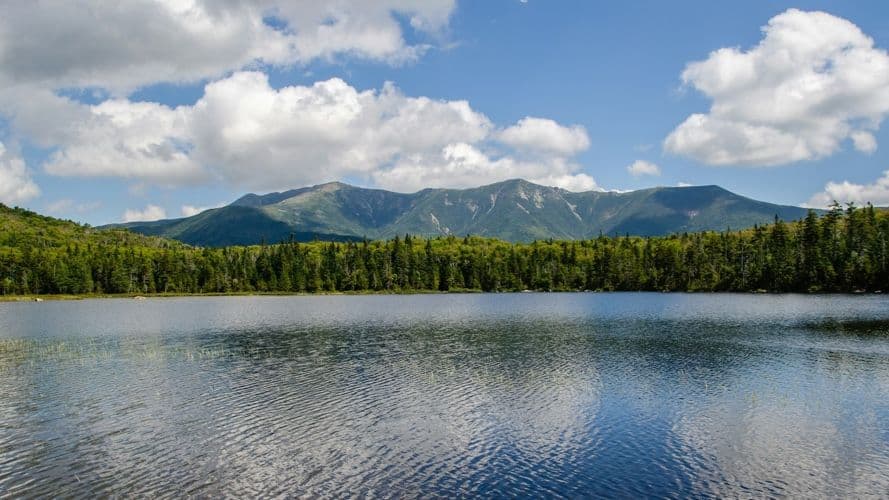
If you grew up here, or you are raising a child here now, summer has a particular smell to it: pine warming in the sun, lake water still cold enough to take your breath, woodsmoke after dark. New Hampshire keeps some of the oldest overnight camps in the country tucked along its lakes, and it keeps a whole different summer running in the towns down south where most families actually live. Both are camp. Both are true.
What camp asks of your family here depends less on the state than on which kind of camp you are looking at, because the state holds several kinds at once, and they ask very different things of you.
The useful way to sort camp here is by form, not by postcard. A cold, clear lake makes a certain kind of camp; the White Mountains make another; the busy southern towns make another still; a shared faith makes yet another. Geography explains some of that and none of the rest, so what follows is sorted by the kind of camp rather than the scenery it happens to sit in.
Weeks on a cold, clear lake
Along the big lakes, Winnipesaukee and the quieter water around it, the state keeps some of the oldest overnight camps in the country. The setting is the point: a cold, clear, glacial lake with a waterfront at the center of everything, cabins set back in the pines, a dining hall, playing fields cut into the woods.
A camp of this kind tends to run in long sessions and turn on the water, swimming, sailing, canoeing, rowing, with a wide spread of land sports, arts, theater, and woodworking around it. Some are camps for boys, some for girls, some coed. Many have been doing this for generations, with families and staff who come back year after year until the place carries its own settled culture.
What this form asks is real. It is the classic handing-over: weeks at a stretch, a child folded into an institution with its own traditions and its own rhythm, often a good distance from home. A meaningful share of campers travel in from well beyond the state, which tells you something about how far families will reach for this particular kind of summer, and how far they are willing to stand back once it starts.
The camp that keeps moving
Farther north, in the White Mountains, camp stops being a place and becomes a route. The high country, with its ridgelines and hut systems and backcountry sites, runs trip programs where teenagers travel under their own power, learning to read a map, set a camp, cook in the backcountry, and lead each other while they backpack and paddle. The camp is the trip. The group moves, and it does not sleep in the same spot every night.
For stretches, this puts a child somewhere a family cannot drive to. The trail closes the loop that most camps keep open, days can pass with the group off the grid and out of contact, and the ask is that a family make its peace with not knowing, for a while, exactly where their child is standing.
The camp that fits inside an ordinary week
Most of the state's own children spend summer closer to home, in the busy southern towns around Manchester, Nashua, and Concord, and along the Seacoast, where the great majority of families actually live. Here camp is a day thing, run largely by town recreation departments, community associations, and institutions like museums and university programs: swimming and field trips, local hikes, sports, arts, and enrichment, with the child home again by dinner. It is the whole sending-away picture turned inside out. Nothing is handed over, nothing travels, and camp simply folds into a working week where the family already is.
Camps gathered around a shared faith
Some camps here are organized around a shared faith, most often a Christian tradition, run by churches, denominations, or camping associations on lakeshore and wooded sites across the state. The ordinary camp day, waterfront and woods and cabins, is still there; what changes is the center it is built around.
For families who want that frame, the draw is a place whose culture and daily rhythm are shaped by a common belief rather than left unspoken. The practical ask tracks whichever underlying form the camp runs, a residential season with its weeks away, or a day program with the child home each night.
Summer here is warm without being heavy, and the nights cool off in a way that surprises visitors, more so up high, where a bright morning can turn cold and wet by afternoon as weather builds over the ridges. The lakes are the thing to understand: glacial and clear and genuinely cold, so swimming is bracing, coldest early in the season and colder still in the mountain ponds. Blackflies come with late spring and linger into the early weeks; mosquitoes keep to the still water. The season itself is short and definite, a real summer with long daylight, bracketed by a late mud-season spring and an autumn that arrives early.
How far you actually stand from your child depends entirely on the form. A day camp keeps you close, with a handoff that resets every evening. A lakeside season puts weeks and real distance between you, with contact norms that vary by camp and are best learned from the camp itself rather than assumed. A mountain trip can take the loop offline altogether for a spell. There is a genuine visiting life around the Lakes Region, but it is worth being honest that those lake towns, Wolfeboro, Meredith, and their neighbors, are summer-tourist towns already, so a parent up for a drop-off or a visiting day is drawing on lodging and meals built for the broad summer trade, not a hospitality world made for camp families.
What holds all of this together is not a single kind of camp but a single environment. Cold water, big woods, fast mountain weather, and a summer that means it: those are the constants, and the forms are just different ways of meeting them. The unusual thing about the state is the range it offers along a single axis, distance. You can choose a summer that never lets go of your hand, or a summer that disappears over a ridgeline for days, or anything between, and the choice is really about how much separation fits your family this year.
None of this settles which camp is right for you, only what each kind tends to ask. If you are early in all of this, the plain groundwork lives in the guide for parents. If what catches your interest is how a month on a lake and a week moving through the mountains can be such different species of the same word, that idea has a home of its own in the camp archetypes. And the summer you spend on your side of the handoff, whatever form it takes, is worth understanding in its own right through the Parent Side Quest.