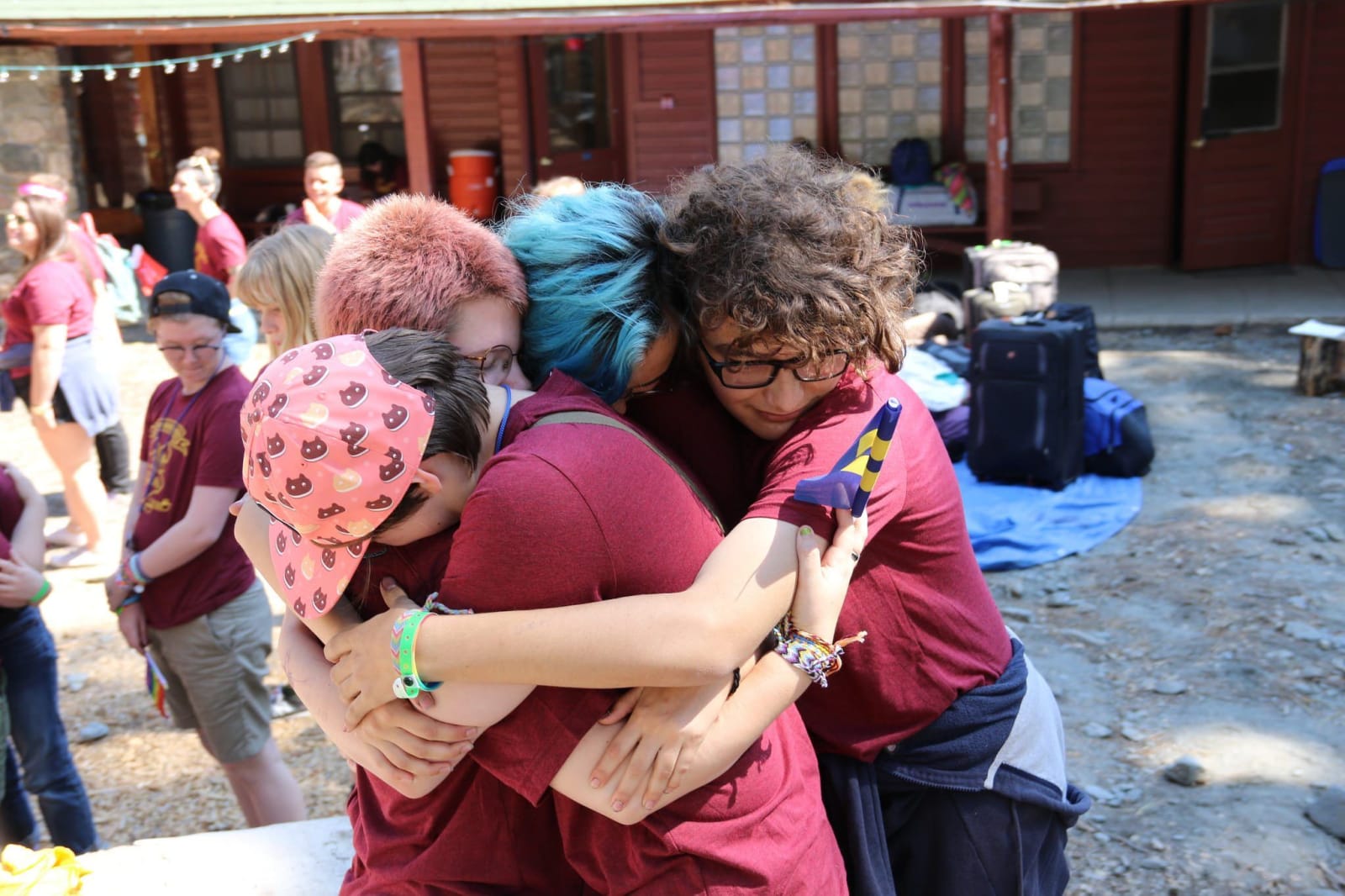

Camp Brave Trails
California, United States
- Gender
- Coed
- Stay
- Overnight camp
- Ages
- 12 - 18 yrs
- Staff to camper
Field Guide
Summer camp in California
A field guide to what a camp summer looks like in California: the forms it takes, how the landscape and climate shape it, and what it asks of a family.
Field notes
Weather in California
Camp in this state lives across a real climate split, and it helps to picture each side of it. Near the coast an early-summer marine layer keeps mornings cool and gray until it burns off, while the interior valleys run hot enough by midsummer to feel like a different state entirely. The ocean stays cold through the season because of upwelling, so coastal swimming is bracing and wetsuits are normal well into summer, colder toward the north. The high country keeps a short, late season behind melting snow, and late summer carries a genuine wildfire-smoke risk in the ranges. The figures here are air temperatures for a coastal and an interior reference point; mountain and high-elevation sites will sit cooler than either, especially overnight.
Coastal (Los Angeles): camp season (June-August (representative core camp season)) runs highs of 72-77°F (22-25°C) and lows of 61-65°F (16-18°C).
Inland valley (Sacramento): camp season (June-August (representative core camp season)) runs highs of 88-93°F (31-34°C) and lows of 56-59°F (13-15°C).
Getting there in California
The way in depends on the corner of the state. For Southern California camp country the main gateway is Los Angeles (LAX), with San Diego (SAN) for the far-southern coast and the marine programs, and the Inland Empire airport at Ontario closer to the San Bernardino mountains. The Bay Area and the Northern California coast and redwoods come through San Francisco (SFO), with San Jose often nearer for the Santa Cruz mountains. For the Sierra, Sacramento (SMF) is the gateway to the northern and central range and the Tahoe region, and Fresno (FAT) is the natural hub for the southern Sierra and the lake camps on its western slope. For the far eastern side and North Tahoe, the honest nearest airport actually sits over the line in the neighboring state.
From any of these the pattern is the same: fast highway first, then a long, winding climb on narrow mountain roads into the timber, whether that is the Rim of the World route toward Big Bear, the Angeles Crest into the San Gabriels, or the grades up toward Huntington and Shaver on the Sierra's west side. Some routes close the loop differently. The island marine camps are reached by ferry or boat rather than any road, a genuine break in the drive-in map. The high trans-Sierra passes open only in the warm months. And for the backcountry expeditions the pavement simply ends at a trailhead, which is where the reachable map ends too. City day camps invert all of this, sitting inside the neighborhoods families already live in. Actual transport, pickups, and any shuttle are best settled directly with the camp.
The Parent Side Quest in California
The parent's own summer here takes whichever shape the camp does. Choose a day camp and it is a light daily rhythm, the child home each evening and the change gradual. Choose a resident site up a mountain, or an expedition into the high country, and it becomes a real letting-go: a drive or a boat, a handoff, and then a stretch of quiet where contact is thin or closed by design. The pretty regions around the mountain and coastal camps are travel destinations in their own right, so a parent who lingers is a visitor among visitors, not part of a waiting-town economy built for camp families; the loop of letters or calls, where it exists at all, is set by each camp and worth asking about early.
That swing, from barely a departure to a sealed stretch of days, is the California shape of something every camp family goes through, wherever they are and whatever the camp looks like. To understand that experience on its own terms, rather than as more detail about this state, [the Parent Side Quest](/field-guide/parent-side-quest) is the part of the Field Guide devoted to exactly that.
Disclaimer & Safety
General information:
This content is for informational purposes only and reflects market observations and publicly available sources. Kampspire is an independent platform and does not provide medical, legal, psychological, safety, travel, or professional advisory services.
Safety & oversight:
Camp programs operate within local health, safety, and child-care frameworks that vary by region. Because these standards are set and enforced locally, families should consult the camp directly and relevant local authorities for the most current information on safety practices and supervision.
Our role:
Kampspire does not verify, monitor, or evaluate compliance with these standards. Program details, pricing, policies, and availability are determined by individual providers and must be confirmed directly with them.