

General information. Details on this profile are supplied by the camp or drawn from public sources, and are not verified by Kampspire. Kampspire does not provide medical, legal, psychological, safety, travel or other professional advice.
Safety and oversight. Camps operate under local health, safety and child-care rules that vary by region. Check safety practices, supervision, staffing and accreditation directly with the camp and the relevant local authority.
Our role. Kampspire is an independent platform. We do not inspect, accredit, supervise or endorse camps, or monitor their compliance with these rules. Dates, prices, policies and availability are set by each camp; confirm them with the camp before booking.
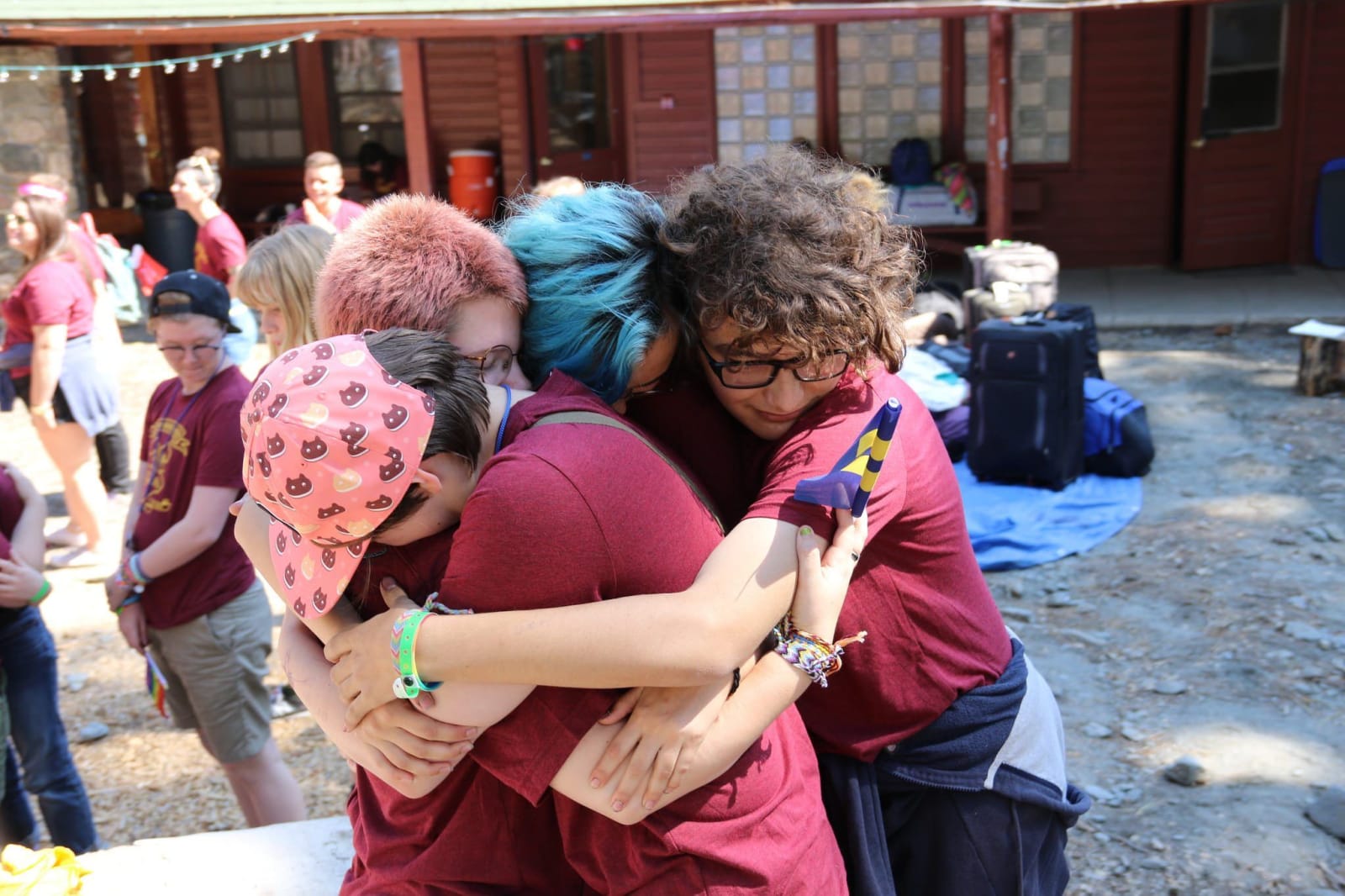
Brave Trails is more than just your average summer camp. While we have a lot of elements of a typical camp, our main focus is helping our campers grow in to the brave leaders they are destined to be. Our program focuses on four key elements: Leadership, Community Building, Self Realization, and Service. We use workshops, adventure and artistic programming, service projects, peer connections, and positive role models to create a safe space where youth can thrive. With the skills learned at camp, our campers will be primed to thrive in their schools, workplace, and personal life. In addition, our campers will have the knowledge and confidence to be more impactful leaders and implement innovative social change in their communities. Brave Trails was formed to respond to the needs of the large and growing population of LGBTQ youth in the greater Los Angeles area. There is not a summer camp anywhere in our target area, which specifically serves LGBTQ youth. We believe camp provides a unique outlet to build leadership and community while exploring the outdoors and just having some good old fun! Given the current climate of inequality in our world, there is a need to empower the next generation of LGBTQ leaders and give them the tools to continue in the quest for justice and civil rights, for all.
Camp season
Jun 12 to Jul 18, 2027
Program profile
3 sessions · Overnight camp
Rates & stays
Planning estimatePer-day tuition
N/A
Per-night tuition
From $338 / USD
Program-specific tuition options
This camp may offer session-specific tuition structures, including variations by length of stay, enrolment timing, or payment schedule. Families should confirm details directly with the provider.
From the California guide
Camp in this state lives across a real climate split, and it helps to picture each side of it. Near the coast an early-summer marine layer keeps mornings cool and gray until it burns off, while the interior valleys run hot enough by midsummer to feel like a different state entirely. The ocean stays cold through the season because of upwelling, so coastal swimming is bracing and wetsuits are normal well into summer, colder toward the north. The high country keeps a short, late season behind melting snow, and late summer carries a genuine wildfire-smoke risk in the ranges. The figures here are air temperatures for a coastal and an interior reference point; mountain and high-elevation sites will sit cooler than either, especially overnight.
Average at camp time
Coastal (Los Angeles)
June
72°high
61°low
July
75°high
64°low
August
77°high
65°low
Inland valley (Sacramento)
June
88°high
56°low
July
93°high
59°low
August
92°high
59°low
Temperature figures are drawn from NOAA/NCEI U.S. Climate Normals. Conditions vary within a state by region, elevation, and distance from the coast, so interior and higher areas generally run cooler than coastal or low-lying ones. Treat these as a general guide, not a forecast for any specific camp.
The way in depends on the corner of the state. For Southern California camp country the main gateway is Los Angeles (LAX), with San Diego (SAN) for the far-southern coast and the marine programs, and the Inland Empire airport at Ontario closer to the San Bernardino mountains. The Bay Area and the Northern California coast and redwoods come through San Francisco (SFO), with San Jose often nearer for the Santa Cruz mountains. For the Sierra, Sacramento (SMF) is the gateway to the northern and central range and the Tahoe region, and Fresno (FAT) is the natural hub for the southern Sierra and the lake camps on its western slope. For the far eastern side and North Tahoe, the honest nearest airport actually sits over the line in the neighboring state.
From any of these the pattern is the same: fast highway first, then a long, winding climb on narrow mountain roads into the timber, whether that is the Rim of the World route toward Big Bear, the Angeles Crest into the San Gabriels, or the grades up toward Huntington and Shaver on the Sierra's west side. Some routes close the loop differently. The island marine camps are reached by ferry or boat rather than any road, a genuine break in the drive-in map. The high trans-Sierra passes open only in the warm months. And for the backcountry expeditions the pavement simply ends at a trailhead, which is where the reachable map ends too. City day camps invert all of this, sitting inside the neighborhoods families already live in. Actual transport, pickups, and any shuttle are best settled directly with the camp.