
Field Guide
A field guide to what a camp summer looks like in Ontario: the forms it takes, how the landscape and climate shape it, and what it asks of a family.
Field notes
Summer days in the south run warm and humid, while the north stays a good deal cooler, and a Shield lake can hand back a cold morning even at the height of the season. The water matters more than the air: these are deep, cold lakes, bracing to swim early and only comfortable at the peak, and the deepest never fully warm. Storms build on hot afternoons, and the early-season bugs are real before they ease off. The figures below are air temperatures only.
camp season (June-August (representative core camp season)) runs highs of 76-81°F (24-27°C) and lows of 57-62°F (14-17°C).
The main gateway is Toronto Pearson International Airport (YYZ), which serves the southern camp regions and the metropolitan day-camp market; for eastern Ontario, Ottawa Macdonald-Cartier International Airport (YOW) is the practical entry. Most families, though, reach camp by car rather than by air.
From the Toronto area the flow toward the cottage-country camps runs up the northbound provincial highway and then off onto secondary roads and camp lanes; for the deep tripping bases the route continues north on the Trans-Canada Highway before narrowing to gravel and, at the last, a crossing by water, since some bases sit on islands. Backcountry trips leave the road altogether, and contact closes where the water route begins. The city day camps invert all of it, sitting where families already live and reached by an ordinary commute or a camp bus. Any transport arrangement is a thing to confirm with the camp itself.
This province asks very different things of a parent depending on the camp. Send a child to a resident or tripping camp and the distance is real: a cold northern lake, a community running to its own clock, and for the longest canoe trips a stretch of days when the usual line of contact simply goes quiet and reopens only when the group returns. The camp regions are old cottage country, so there is somewhere to be while you wait, but what you find there is the ordinary tourism of the lakes rather than anything arranged for camp families.
The city day camps sit at the other end, with no waiting-town and no silence, just the child home each evening and the plain daily loop of drop-off and pickup. And where summer is carried within a community on the land, the shape changes again, with family close by and a child handed to people already known rather than sent away. The parent's own passage through all of this, the letting-go and the waiting and the version of your child who comes back, is its own thing worth understanding. The [Parent Side Quest](/field-guide/parent-side-quest) is the part of the Field Guide about exactly that.
General information:
This content is for informational purposes only and reflects market observations and publicly available sources. Kampspire is an independent platform and does not provide medical, legal, psychological, safety, travel, or professional advisory services.
Safety & oversight:
Camp programs operate within local health, safety, and child-care frameworks that vary by region. Because these standards are set and enforced locally, families should consult the camp directly and relevant local authorities for the most current information on safety practices and supervision.
Our role:
Kampspire does not verify, monitor, or evaluate compliance with these standards. Program details, pricing, policies, and availability are determined by individual providers and must be confirmed directly with them.
Welcome to Chikopi. Every summer we see boys trade their screens for the lake, make friends from around the world and return home with stories they will tell for years. It is a summer they will always remember, and we would be happy to tell you more about it. Please call or write any time.

Chikopi Family
Directors
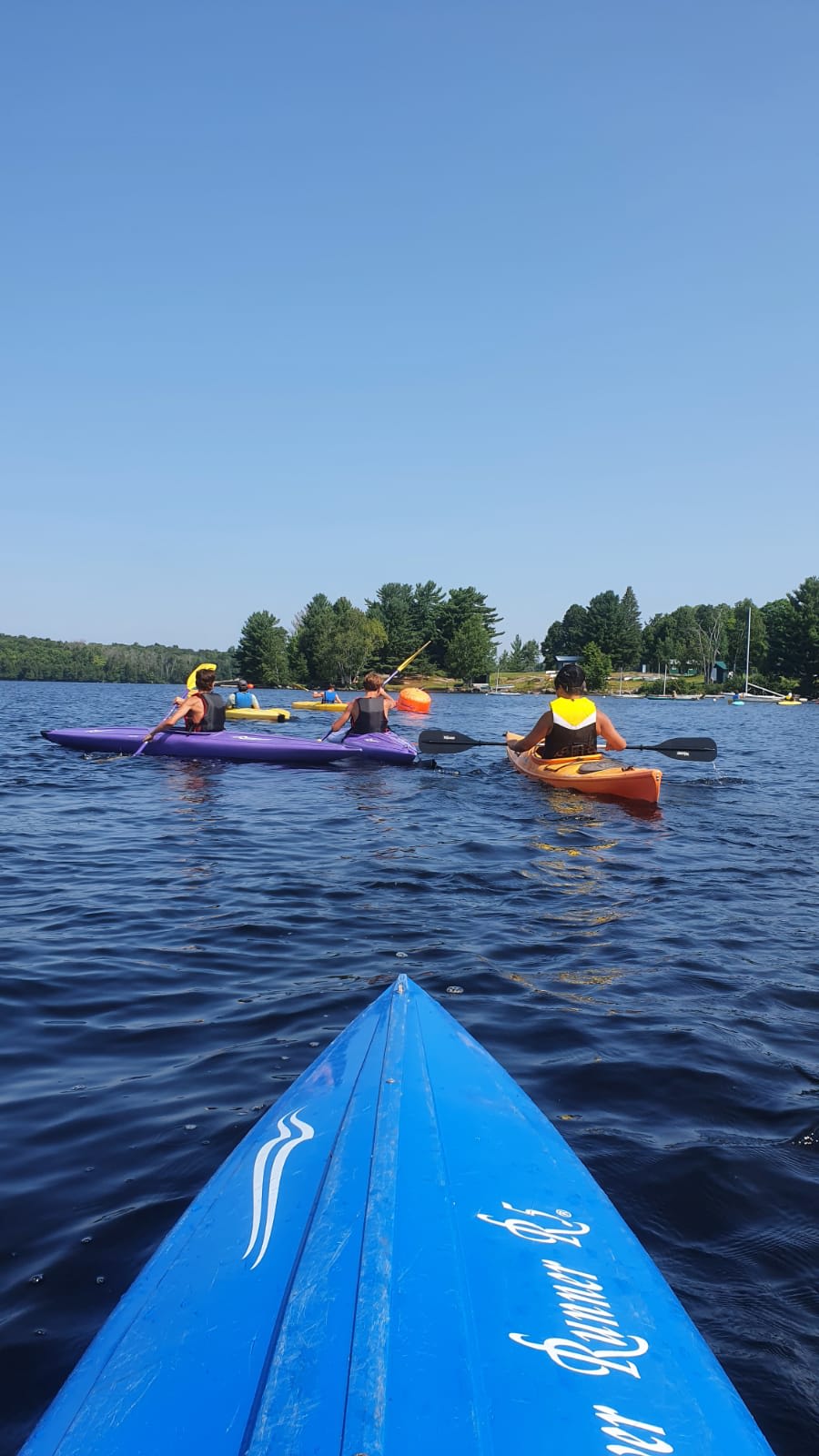
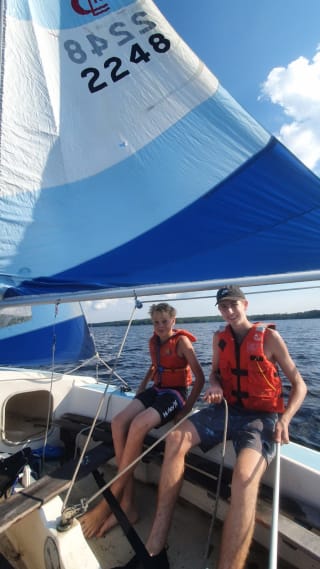
In 1920, Matt and Lea Mann opened a camp on Ahmic Lake with an idea no one had tried before. They built a summer camp around sports, and Camp Chikopi became the first camp of its kind in the world. More than a century later, their philosophy still guides us. Give boys a full day of activity, good coaching, good friends and good food, and they will thrive. Today, most families who find us want the same thing. They want to get their son off the screen and outside for the summer. That is exactly what Chikopi has done for over a century. We are a technology-free camp and always have been. No phones, no screens, no gaming. Just fresh air, open water and a full summer with friends. The days are full, boys swim, sail, play soccer, tennis and basketball, ride the mountain bike trails and race war canoes. Some come as serious athletes, others are trying a sport for the first time, both fit right in. Campers come from across Canada and around the world, and every summer we welcome third and fourth generation Chikopi families. Chikopi is a rustic, traditional camp, accredited by the Ontario Camps Association since 1965. Here, boys get their hands dirty, try new things and leave as more confident, independent young men. We would be happy to tell you more. Call us at 705-387-3811 or write to campchikopi@aol.com.
Take a look at a typical day in the life at our camp, moment by moment.
Mornings are lesson on skills and rules of sports, afternoons are games and free time, evenings are pickup games and camp fires.
Active boys need good food, and plenty of it. Every meal at Chikopi is prepared and cooked fresh on site by our kitchen team. Boys sit down to three meals a day, each with three courses. Breakfast fuels the morning activities, lunch refuels them for the afternoon, and dinner brings the whole camp together at the end of a full day. Before bed, there is an evening snack. Mealtimes are a big part of camp life. The whole camp eats together in the dining hall, and there is always lots of talk about the day's games and results.
Every boy at Chikopi is part of a cabin group, living with counselors who know him by name and look out for him from the first day to the last. Our counselors keep the days full and help each boy settle in, make friends and find activities he enjoys. New campers often feel a little homesick at first. Our staff watch for it, keep boys busy and involved, and stay in touch with parents when needed. Most boys settle in within the first few days. Campers come to us from many countries, languages and backgrounds, boys quickly learn to live, play and compete alongside one another. Chikopi is a full, active program. Before registering, we ask families to talk with us about any medical, behavioural or learning needs. That way we can decide together whether Chikopi is the right fit for their son.
Camp season
23 Jun - 11 Aug 2027
Program profile
1 session · Overnight camp
Rates & stays
Planning estimatePer-day tuition
N/A
Per-night tuition
From $143 / CAD
Program-specific tuition options
This camp may offer session-specific tuition structures, including variations by length of stay, enrolment timing, or payment schedule. Families should confirm details directly with the provider.
Per-night (overnight) and per-day (day) figures are calculated from each session's standard tuition and shown as a planning reference only. We show the lowest per-night or per-day rate across this camp's sessions, so the total for a given session, and your actual tuition, may be higher depending on length of stay, age group, or enrolment timing.
This estimate helps families understand the overall scale of commitment across stay options. Final tuition, inclusions, discounts, and payment structures vary by session and are confirmed directly with the camp.
Additional session information
2027 Session dates and fees coming soon