Home
    Camps in California
    Camp Trinity on the Bar 717 Ranch
    Camp cover
    Camp Trinity on the Bar 717 Ranch logo

    Camp Trinity on the Bar 717 Ranch

    California, United States
    Camp starts in 6 weeks
    Gender

    Coed

    Stay

    Overnight camp

    Ages

    7 - 16 yrs

    Staff ratio

    TBC

    About our camp

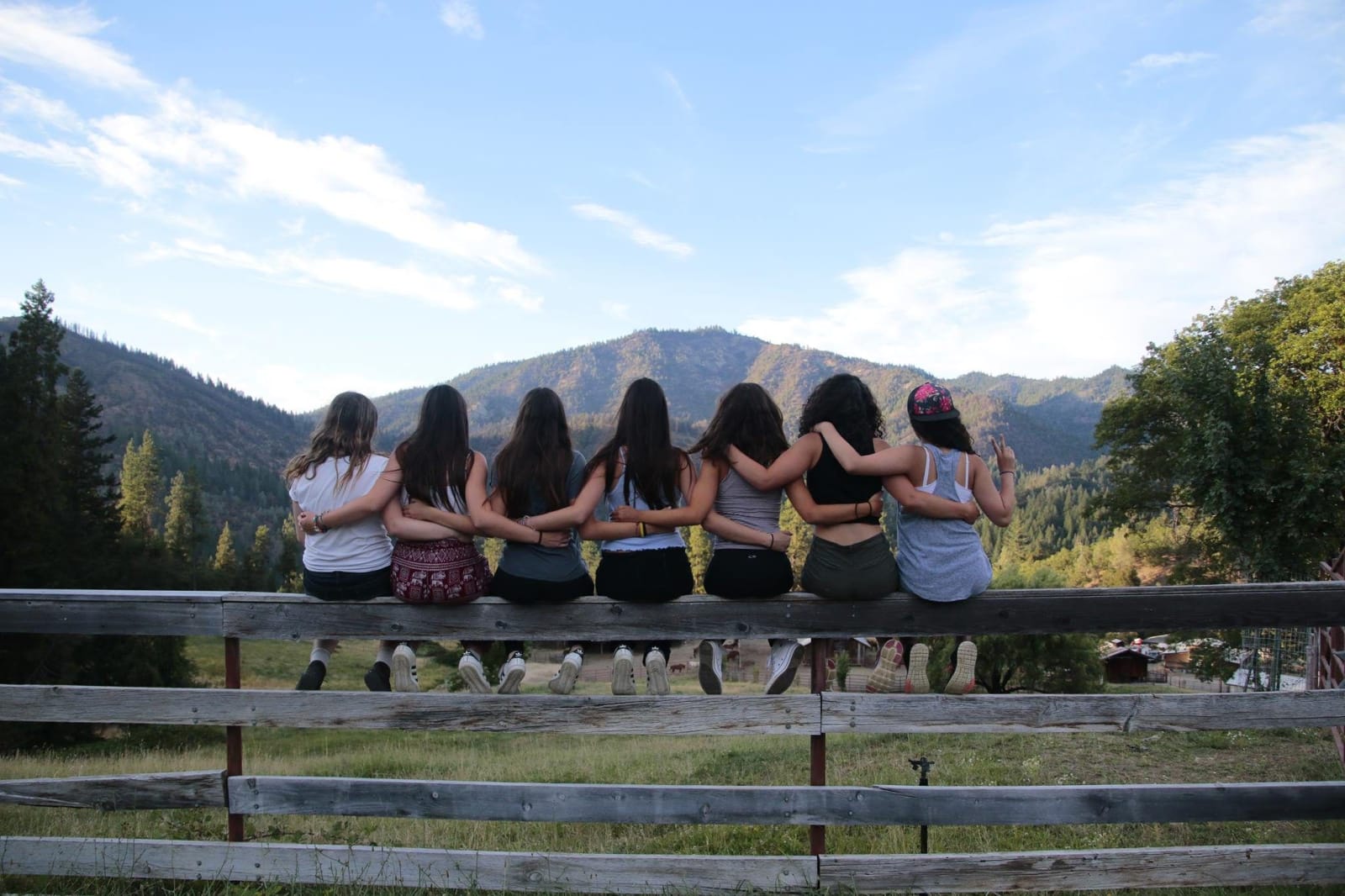
    Unplug and unwind on 450 acres in the beautiful Trinity mountains. For over 80 years, Bar 717 Ranch has been welcoming children, and helping them express themselves in a non-competitive setting. Being the oldest co-ed accredited summer camp in California, Bar 717 Ranch makes sure that all campers follow their long stand traditions of cooperation, resourcefulness, and respect for the land. Campers are encouraged to follow their hearts everyday, and with nature as their companion it provides them with vital respite from the digital culture that has become an imposing presence for many children. When camp ends campers have a newfound sense of both self-reliance and deep community that endures for a lifetime.

    Our programs

    There is something here for everyone, whether it is horseback riding, silk screening or blacksmithing, life on the Ranch is rustic and unplugged. We live, work, and play in a co-educational, non-competitive setting where campers are encouraged to try new activities, learn new skills , and assume new responsibilities as part of our large ranch family.

    We offer over 6 activities here are a few:

    BackpackingBackpacking
    CampfiresCampfires
    HikingHiking
    Horseback ridingHorseback riding
    Leadership trainingLeadership training
    SwimmingSwimming

    Session overview

    Camp season
    14 Jun - 08 Aug 2026
    Program profile
    4 sessions · Overnight
    Rates & Stays
    Planning Estimate
    Day session
    Average daily tuition
    N/A
    Overnight session
    Average daily tuition
    from $328 USD

    Program-specific tuition options

    This camp may offer session-specific tuition structures, including variations by length of stay, enrollment timing, or payment schedule. Families should confirm details directly with the provider.

    Daily figures are calculated from standard tuition and shown as a planning reference only.

    This estimate helps families understand the overall scale of commitment across stay options. Final tuition, inclusions, discounts, and payment structures vary by session and are confirmed directly with the camp.

    Upcoming sessions:

    Where this camp is located

    Hayfork, California, United States

    The Bar 717 RanchHayfork, California, United States

    Explore the California camp system

    Camps in California operate within a broader regional system shaped by geography, climate, infrastructure, and local traditions. Explore how these factors influence daily camp life across the area.

    Quick resources:
    Learn more about California

    Explore the California camp system

    Camps in California operate within a broader regional system shaped by geography, climate, infrastructure, and local traditions. Explore how these factors influence daily camp life across the area.

    The Parent Side Quest in California

    The parallel experience that unfolds outside the camp system

    The parent adjacent layer in California is defined by the destination tourism corridors that surround the state elite camp zones.

    During drop off and pick up, the towns of Truckee, Ojai, and Carmel experience a surge of parents who occupy the parallel world of wine tasting and high end spa retreats. This waiting rhythm is characterized by a shift to the California slow down where the pace of life is dictated by the timing of the tides. Parents often occupy the boutique hotels of Santa Barbara or the lakeside rentals of Lake Tahoe where the sound of the wind through the redwoods provides a sensory mirror to the camp environment. The rhythm is dictated by the availability of dining and seasonal temperature swings.

    In the southern part of the state, parents may linger at the resorts of Palm Springs or the coastal enclaves of Laguna Beach. This layer is anchored in the gateway cities where proximity to the Sierra or Coast Ranges provides a natural retreat. The physical distance between the urban centers and the mountain camps often necessitates a multi day stay in a regional hub. This transit friction load surfaces as a heavy concentration of vehicles on mountain passes like the I-5 Grapevine, which resolves into an observed constraint on communication rhythm as parents are delayed in areas without cellular service.

    Roads narrow as they climb toward the tree line.

    Towns like Roseville and San Bernardino serve as the primary gateways and logistical funnels for parents entering the system. The sensory experience includes the constant sight of California State Park signage and the tactile feel of dry Mediterranean heat. Parents encounter the same transit friction of the highway system, making the arrival at the camp gate a significant logistical milestone. In the north, the experience may be centered around the Napa Valley or the redwood forests of Humboldt County where the smell of damp earth is pervasive.

    This external layer operates on a timeline of leisure time emphasizing the recreational nature of the summer. The parent adjacent experience is a geographic mirror of the camp system, defined by the movement toward environmental cooling zones. This geographic load surfaces as the high cost and low availability of lodging near camp perimeters, which resolves into an observed constraint on transit weight as families may choose to fly and rent vehicles rather than drive across the state. The side quest is a high luxury economy that exists in the same solar drenched window.

    Gateway towns are marked by the presence of outfitters and supply stores catering to the camp influx. These locations serve as the final transition point before the isolation of the forest or coast. The waiting rhythm is a structured part of the California summer experience. It is where the urban and wild environments meet.

    gateway city funneling.

    mountain pass traffic accumulation.

    coastal enclave waiting rhythm.

    the sight of the Pacific sunset

    California weather patterns

    A parent watches the morning fog retreat from a coastal ridge as the first signs of dry heat arrive from the interior. The environment is defined by diverse microclimates where maritime influence meets arid inland air. Thermal shifts are often abrupt, driven by topography and the proximity to the Pacific.

    Thermal System

    Temperatures vary significantly between sun and shade. Inland sites experience rapid heating under clear skies, while coastal locations maintain a steady, cool baseline. The absence of humidity allows for efficient cooling as soon as the sun drops or the marine layer moves inland.

    High microclimate variability

    Rapid solar heating

    Efficient nocturnal cooling

    The sudden chill when stepping out of a sunlit patch.

    Moisture System

    Atmospheric moisture is largely confined to coastal fog banks that provide morning saturation. Inland, the air is characterized by low humidity and high evaporation rates, leaving the ground and vegetation dry. Summer precipitation is rare, making surface dust a consistent environmental feature.

    Predictable coastal fog cycles

    Low inland humidity

    Minimal summer precipitation

    The fine dust settling on a leather boot.

    Sun Exposure

    Solar radiation is intense and consistent across the season. The lack of cloud cover in the interior results in sustained UV exposure from midmorning through late afternoon. Coastal areas experience a diffused light environment until the marine layer clears, revealing highintensity sun.

    Sustained high UV levels

    Low cloud cover frequency

    Highcontrast shadow lines

    The searing brightness of a white concrete path.

    Microclimate variability and intense solar exposure represent the primary environmental constraints.

    This content is provided for general informational purposes only and reflects market observations and publicly available sources. Kampspire is an independent information platform and does not provide medical, legal, psychological, safety, travel, or professional advisory services. Program details, supervision practices, safety protocols, pricing, availability, and policies are determined by individual providers and should be confirmed directly with them.

    California travel context

    Arrival at major hubs involves a transition from dense, multi level terminal loops into high velocity coastal corridors. Travelers navigate automated people movers or shuttle connectors to reach consolidated transit hubs. The movement is defined by a shift from marine layer fog toward the arid, inland heat of mountain or valley camp zones.

    Los Angeles International Airport (LAX)

    The airport operates as a horseshoe shaped terminal system with significant distances between gates and the central ground transportation islands. Staging occurs at designated remote zones or specific terminal curbsides depending on vehicle type. High frequency shuttle loops are required to bridge the gap between aircraft arrival and regional transit departure.

    Distributed terminal architecture

    Mandatory shuttle link transit

    High density staging zones

    The persistent hum of the terminal cooling fans.

    Transit corridor

    Transit typically utilizes the I 5 or I 15 arteries, crossing coastal ranges through steep mountain passes. These corridors feature multi lane highway systems that experience rapid elevation gains and significant thermal shifts. Traffic density remains a primary factor in transit duration until reaching rural forest boundaries or high desert plateaus.

    Mountain pass navigation

    Sustained high velocity transit

    The change in air pressure as the vehicle summits the coastal range.

    The primary friction point is the high volume traffic congestion within the urban to rural transition zones.

    This content is provided for general informational purposes only and reflects market observations and publicly available sources. Kampspire is an independent information platform and does not provide medical, legal, psychological, safety, travel, or professional advisory services. Program details, supervision practices, safety protocols, pricing, availability, and policies are determined by individual providers and should be confirmed directly with them.

    Disclaimer: This content is for general informational purposes only. Kampspire does not verify provider compliance, safety standards, or site-wide data accuracy; all details and policies must be confirmed directly with the source. Refer to ourFull Terms.

    Kampspire Logo

    Established 2011

    General

    • Home
    • Add My Camp
    • Help

    Popular locations

    • New York
    • Pennsylvania
    • Maine
    • California
    • Alberta

    Understand camp

    • Camp Ready
    • Field Guide
    • Global camp system
    • Camp Archetypes
    • Archetype home
    • Civic integration hubs
    • Discovery hubs
    • Immersive legacy habitats
    • Mastery foundations

    Explore camp systems

    USA

    • New York
    • Pennsylvania
    • Maine
    • California
    • Wisconsin
    • North Carolina
    • New Hampshire
    • Michigan
    • Colorado
    • Massachusetts
    • View all

    Canada

    • Ontario
    • Quebec
    • British Columbia
    • Alberta
    • Manitoba
    • Saskatchewan
    • Nova Scotia
    • New Brunswick
    • Newfoundland
    • Prince Edward Island
    • View all

    © 2026 ®

    ·
    Terms ·Privacy ·Sitemap