
Get in front of families planning their summer. It's free to add your camp.
General information. Details on this profile are supplied by the camp or drawn from public sources, and are not verified by Kampspire. Kampspire does not provide medical, legal, psychological, safety, travel or other professional advice.
Safety and oversight. Camps operate under local health, safety and child-care rules that vary by region. Check safety practices, supervision, staffing and accreditation directly with the camp and the relevant local authority.
Our role. Kampspire is an independent platform. We do not inspect, accredit, supervise or endorse camps, or monitor their compliance with these rules. Dates, prices, policies and availability are set by each camp; confirm them with the camp before booking.
Camp Kawkaka is focused on the spiritual, mental, physical and social/emotional growth of children and their families. It has a vision to “Transform Lives…Build Leaders…Impact the World…for Christ”. They are committed in sharing principles and values that will help children strengthen their faith in Christ. Kawkaka summer camp is open to children from 7 years old up to 18-year-old adults, as well as to entire families. Having its history rooted back in 1973, Kawkaka Camp has evolved greatly and now offers a full summer experience with modern facilities, buildings and cabins to make its visitors’ stay comfortable and enjoyable. Kawkaka Camp creates a safe environment for everyone to share, learn, have fun and develop faith. Through various activities campers gain leadership and interpersonal skills that they take well beyond the gates of the camp.
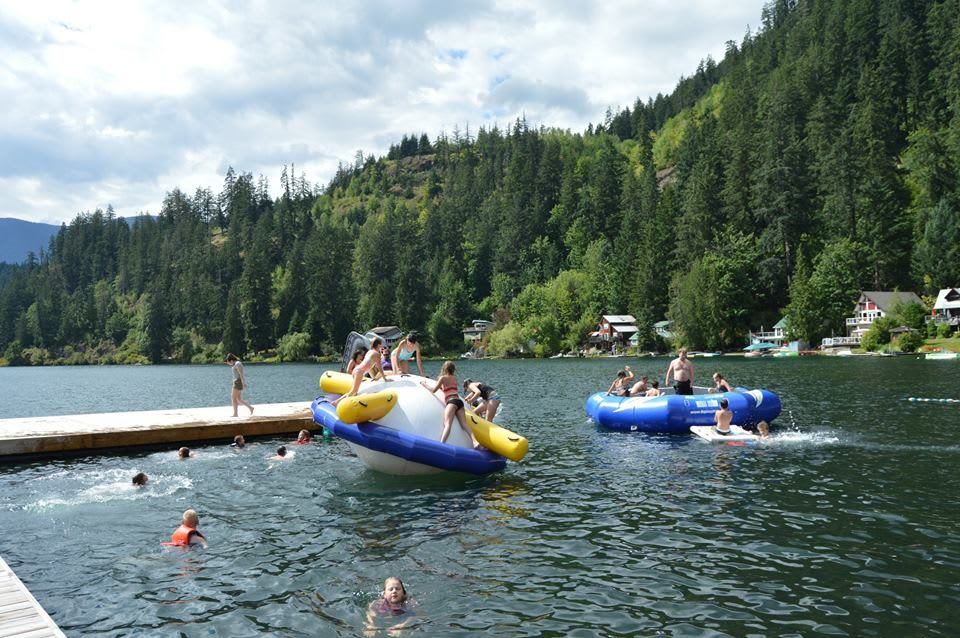
Offering a wide range of programs for separate age groups, Kawkawa Camp makes sure everyone enjoys an activity that matches his/her ability and interests. Kids, teens, and adults can experience kayaking, swimming, surf biking, canoeing, archery, riflery, bouldering, golf, gaga, frisbee, as well as mountain and forest hiking. Group activities are a central component of the camp life that teach to work in a team, communicate effectively, and feel the joy of participation. Stargazing, birdwatching, exploring local trees and vegetation are experiences that help relax and learn amazing things about nature. Biblical teachings, chapel and campfire times are also incorporated into the summer camp program.
From the British Columbia guide
Summer in this province is really several summers, and which one you are packing for depends entirely on where the camp sits. The south coast and islands stay cool longer than newcomers expect, with grey marine mornings and fog that burns off toward midday, and an ocean that never truly warms, so coastal swimming is bracing and brief. Inland, the Okanagan and Kootenay country turn hot and dry, with lakes warm enough for whole afternoons. Late summer can bring wildfire smoke that reshapes a day here and there, mountain mornings stay cold even at the peak of the season, and the daylight runs long and late throughout. The figures below are air temperatures from a single southwest-coast station; the interior and the north run warmer, drier, or colder and vary widely.
Average at camp time
June
67°high
53°low
July
72°high
57°low
August
72°high
57°low
Temperature figures are drawn from NOAA/NCEI U.S. Climate Normals. Conditions vary within a state by region, elevation, and distance from the coast, so interior and higher areas generally run cooler than coastal or low-lying ones. Treat these as a general guide, not a forecast for any specific camp.
Most families arrive through Vancouver International (YVR), the main gateway for the southwest and the Sunshine Coast. For southern Vancouver Island, Victoria International (YYJ) is the closer door; for the Okanagan and the Southern Interior, Kelowna (YLW); and for the north-central interior, Prince George (YXS). From any of these the pattern is similar: a highway carries you most of the way, then the last stretch shifts onto secondary roads, onto water, or into the air. Camp country strings out along corridors like the Sea-to-Sky toward Squamish and Whistler, and the Trans-Canada east through the Fraser Valley into the Interior.
The coast adds a wrinkle the map does not always show. Islands and the Sunshine Coast mean a ferry sailing, and remote coastal communities can be reached only by small boat or float plane, some with no road at all. Backcountry expeditions end where the road ends, and contact thins for parts of the trip by design. In the cities the whole thing inverts: urban day camps in Vancouver and Victoria sit where families already live, no journey required. Ferry times, shuttles, and pickups change and are best confirmed directly with the camp rather than assumed.