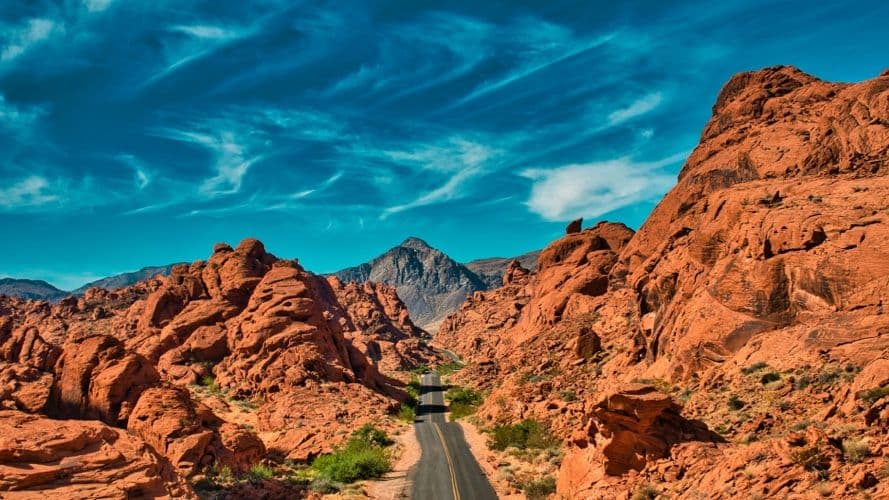
If you are raising a child in Nevada, you already know that summer is organized around the heat. By late morning the valley floor gives off a white, shadeless glare, and the day sorts itself into the cool hours and the hours you spend indoors with the blinds drawn. Summer for children here bends around that fact the way everything else does.
So camp here falls into a few recognizable shapes. There is the kind a few minutes from your door, built to keep children busy and out of the worst of the afternoon. And there is the kind that means leaving the valley altogether, going up to where the pines start or over to the cold edge of the lake, and coming home at the end of the week a little browner and a little more independent. Both are ordinary here. Which one you reach for says less about your child than about how far you want summer to take them.
The clearest way to make sense of camp here is by what kind it is, not by where it sits on the map. Day camps gather in the cities, because that is where the children are. Overnight camp is a different thing, and in Nevada it is shaped by a hard fact of the desert: you cannot run a summer of sleepaway on the open floor of the valley through the worst of the heat. So the resident camps have collected where the heat relents, up in the mountains, along the cold shore of the lake, or at a rare spring-fed patch of green north of the city. Terrain does not conjure camps out of scenery here; it decides where the ones that exist are able to stand.
Down on the valley floor, where most of it happens
For most Nevada families, summer camp is a day camp, and it happens close to home. Cities and towns run them out of recreation centers, school gyms, and the shaded corners of parks, and the day is arranged around the sun: active early, indoors and cool through the flat middle of the afternoon, out again when it eases. Some are all sport, some all art or coding or science, and plenty mix everything a child might try across a stretch of weeks.
The appeal is partly the child's summer and partly the shape of the family's. You are in the same city at the end of the day. The handoff is small, the information loop short, and when something comes up you are minutes away rather than a mountain range. It is the least dramatic kind of camp, and for most families here it is the one summer actually runs on.
Climbing out of the heat to sleep away
The overnight camps sit where the map goes green. Above Las Vegas, a canyon road climbs into the Spring Mountains until the desert gives way to pine and the nights turn genuinely cold; that is where the valley's resident camp lives, below the ski runs, with mountain biking and archery and long hikes and the kind of campfire that needs a jacket. North of the city, at a spring-fed oasis where water surfaces in the middle of dry country, another cluster of overnight camp gathers around the improbable green.
West, at the Sierra edge, camp moves to the shore of the big alpine lake. The water there stays cold enough all summer that swims are short and bracing, and the days run to kayaking, rock climbing, and nights out at real elevation. Some of the oldest camps on that shore were founded long ago by churches and still carry that spirit; they belong here plainly, as part of the long tradition of summer on the lake, not as anything to weigh.
What these share is a short vertical journey rather than a long one. Your child does not travel far in miles; they travel up, out of the heat and into a different climate for a week, then come home to the valley you never really left. The distance that matters is measured in elevation, not in hours on the road.
Small towns, long distances between them
Out in the Great Basin the picture thins and shifts in character. Between the eastern towns, across country where the next community can be a long drive off, small outdoor programs run week-long adventures that build toward a night spent out in the open: days among the marshes and their wildlife, outdoor skills, the kind of exploring a wide, empty landscape invites. These are modest and community-run, and for the most part they serve the children who already live nearby. For a family out there this is simply the local summer, close to home; for anyone coming from elsewhere, it is a very long way across open ground.
Summer on tribal land
For some Nevada children, summer carries a meaning rooted in their own community. On tribal lands, summer for young people can mean time with elders and community members: learning language, traditional dance, oral history, and craft such as beadwork, in settings that are as much gathering as classroom. Within these communities this is widely understood as a way of keeping knowledge alive and passing it to the next generation, and it is theirs to shape.
This is not a program an outside family signs up for, and it is not described here as one. It is a pattern of summer that belongs to the community, where the child is already known, the handoff is to familiar people, and the point is continuity rather than getting away. An outside view can only see so much of it, and the honest thing is to say that plainly and leave the rest to the people who live it.
Nevada does not really have a single summer so much as a divide between the floor and the heights. Down on the valley floor it is dry, brilliant, and fierce, the sun close and the shade thin, which is why so much of camp is built around the morning and the retreat indoors. Up in the mountains, or across at the lake, it turns cool and cold at night, with alpine water that stays icy enough to keep swims short. Late summer can throw sudden storms up over the ranges and send water racing down the desert washes, and on some days smoke from far-off fires hazes the sky. The figures in the weather note belong to the hot southern valley; the high country and the north run much cooler than they let on.
How close you stay depends entirely on which camp a child lands in. With a city day camp you never really leave: home is the waiting place, the loop is short, and camp is a part of the same day you are already living. Send a child up to the mountains or the lake and the distance is still small, though the towns they pass through are built for tourists rather than for camp parents, so do not expect a waiting-room economy grown up around the camp itself; it is the ordinary resort landscape you already know. Out in the interior and on tribal land, the family tends to be close in a different way, near or inside the community, handing off to people they already know. Both the easy city loop and the close community handoff are true here, at the same time.
Put together, what camp in Nevada keeps returning to is the relationship between children and the heat. Whether a family sends a child a few blocks or up a mountain, the summer is organized around finding the cool hours, or the cool places, and filling them with something worth doing. The state asks parents to decide not so much what their child will do as how far they want the summer to carry them from the front door, and both answers, the close one and the far one, are genuinely at home here.
If you are weighing all of this for the first time, it can help to step back from Nevada specifics and think about what camp asks of a family in general; the guide for parents is the part of the Field Guide built for exactly that. And if you find yourself trying to name what kind of camp would actually suit your child, the camp archetypes are a way of understanding those underlying shapes, wherever in the world a family happens to be looking.