By the deep middle of a Tennessee summer, the air has real weight to it. Cicadas run their long electric hum through the oaks, the light goes thick and gold by late afternoon, and somewhere a thunderhead is usually building over the ridgeline to the east. This is the season a parent here starts picturing a child somewhere else for a stretch of it: at a lakeside cabin on the plateau, on a creek bank down in the foothills, or simply on a bus pulling out of a church parking lot on a Monday morning.
Camp in this state is not a single thing, and it does not sit in a single place. It stretches the whole width of Tennessee and takes several honest shapes, formed as much by who gathers the children as by the land they are gathered on. Knowing which shape you are looking at matters more than any brochure, because each one asks something a little different of a family.
The clearest way to read camp here is by who runs it and what kind of week it is, rather than by the map. A faith week, a county camp, and a city day program can all sit within an easy drive of each other, so the land is mostly backdrop. The single real exception is the east, where the mountains genuinely carve out a form of their own. If it helps to hold the different underlying purposes of camp side by side as you read, the camp archetypes are the part of the Field Guide about exactly those recurring shapes.
Weeks organized around a tradition
A large share of overnight camp in Tennessee is run by churches and ministries, gathered on the Cumberland Plateau, tucked into the eastern foothills, and spread across rural acreage in the middle of the state. On the ground these look like ordinary camp: cabins and a dining hall, a waterfront or a pool, canoes, hiking trails, and the smell of woodsmoke after dark. The difference is the frame around the days. Alongside the swimming and the games sit worship, teaching, and small-group time, and the whole week is organized around a particular tradition and how closely it is held.
Some of these camps belong to a single denomination and draw mostly from its own congregations; others read more broadly and open their gates wider. For a family, the choosing turns less on the activity list than on whether the tradition, and the intensity with which it is carried, matches your own. Enrollment often runs through a home congregation as much as a website, and the week becomes a handoff into a defined community, not only a spot on a lake.
What the eastern mountains make possible
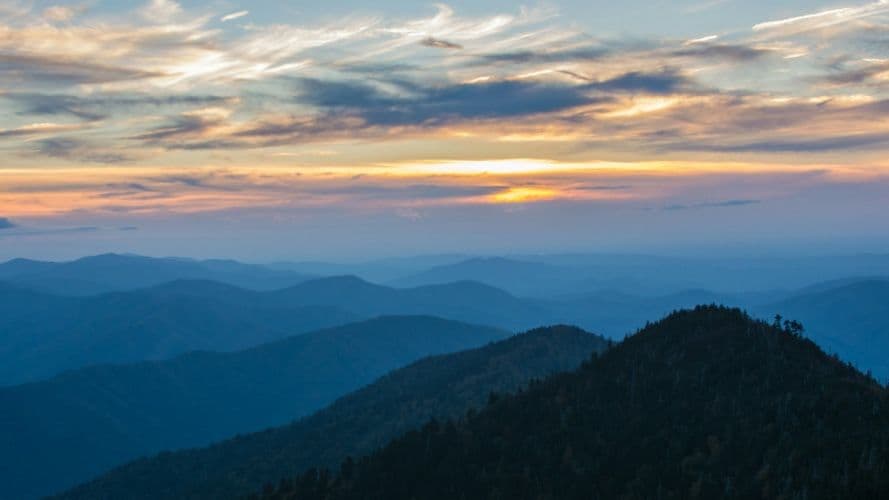
East of the plateau, the land itself starts running the program. The Great Smoky Mountains, the Cherokee forest country, and the plateau rim put steep woods, cold fast rivers, and real caves within reach, and a whole family of camps has grown up to use them. This is the part of the Tennessee picture where geography is not backdrop but cause: these forms simply could not exist out on the western flatland.
At the gentler end are the field-science and naturalist camps, which set children loose among salamanders, streams, and old forest with people who study them for a living. At the more strenuous end are the adventure camps, stacking caving, tubing, rappelling, rock climbing, backpacking, and whitewater into a week. Some run as day programs close to a base; others move deeper in, where the ground under the day keeps changing as the group travels.
What this asks of a family is more physical and more concrete than a packing list of sunscreen and bug spray. It wants a child ready to move through country where the road narrows to gravel and then to trail, where a phone signal thins out, and where managed risk is part of the point rather than a thing to be smoothed away. That trade, more contact given up for more mountain gained, is the honest shape of this form.
The cooperative, county-connected camp
Running quietly underneath the private market is a network of youth-camp centers reached through the state's cooperative-extension system, from a big newer farm-and-lakes property out west to long-standing centers in the central and eastern regions. What happens there looks like classic camp, with ziplining and archery and swimming and campfire, but the structure around it is civic rather than commercial: broadly affordable, secular, county-connected, with specialty weeks for shooting sports, robotics, and the outdoors sitting beside the general junior sessions. For many families the door in is a local county office rather than a booking page, and the week tends to gather children who already share a county or a program, so it reads as a civic rite as much as a purchase.
In the cities, the day that ends at home
Around Nashville, Memphis, and the middle-state towns between them, camp inverts. Here the child comes home every evening, and the week is threaded straight through ordinary city life: park programs and community centers, university campuses, a wooded day-camp site out on a reservoir shore, and pools and lakes close enough to reach before lunch. Themes change from week to week, and the larger operations often run supervised bus and neighborhood pickup, though the particular routes are always something to settle directly with the camp.
The music in this region also leaves its mark on the camps. A deep arts strand runs through the metros, with musical-theater, band, guitar, strings, and vocal programs led by performing-arts centers and universities. For a family, this form asks almost nothing of geography and a good deal of daily rhythm: the drop-off, the pickup, the bus route, all folded into a normal working day, with the child back at the table for dinner.
The single fact every Tennessee summer turns on is humidity. Through the core season the basin and the western lowland sit heavy and damp, with thunderheads stacking up on many afternoons and breaking in the early evening. The eastern mountains run cooler, wetter, and greener, elevation taking some of the edge off. Water here is warm relief rather than a cold shock: reservoir lakes, plateau creeks, and mountain rivers stay swimmable right through the season, though moving mountain water still runs brisk and quick. And in the woods, the chiggers and ticks and mosquitoes are simply part of the day, not a footnote to it.
How far away camp actually feels depends entirely on the shape you have chosen. Send a child to an overnight camp on the plateau or up in the hills and the day opens with a real drive out of the metro into quieter country, with contact for the week running through the camp's own channels. It is worth being clear-eyed about the waiting parent's options out there: a dedicated camp-town economy is thin across most of the state, and where families do linger near an eastern camp they are leaning on general mountain tourism rather than anything built for them. Choose a city day camp instead and there is no waiting town at all, because the child is simply home by dark. Both of these are genuine Tennessee experiences at once, and the pull between them is its own thing worth understanding.
What ties these together is not a landscape or a logo but a posture toward summer. Whether the week is framed by a faith, run through a county, built on a mountain, or folded into a city block, Tennessee tends to treat camp as something a community does with its children rather than a product it sells to them. The activities rhyme from one to the next. What actually differs, and what is worth reading closely before you choose, is the frame around the days and the distance it puts between you and your child.
If you are still working out what any of this would ask of you in particular, the broader guide for parents is the place that walks through the questions sitting underneath every camp choice. It is not about Tennessee specifically; it is about learning to read whatever camp ends up in front of you, in whatever shape it takes.