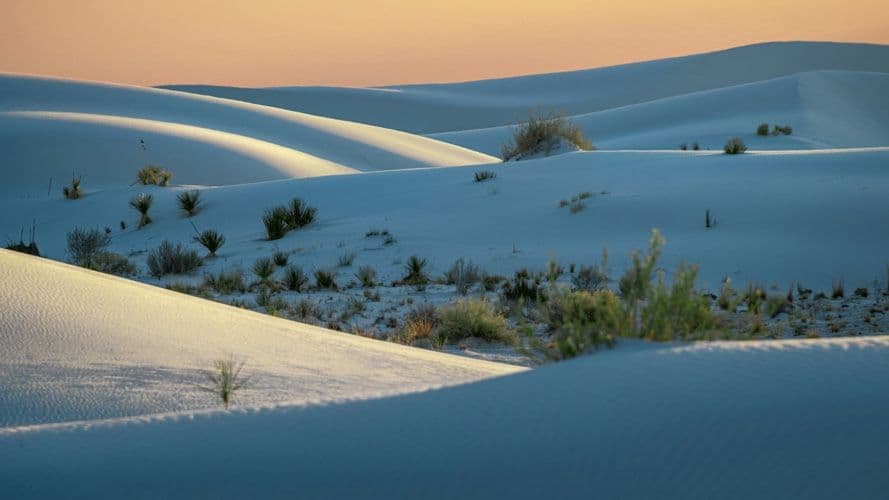
A New Mexico parent knows the shape of a July afternoon in the valley: heat coming off the ground, light dry and almost white, thunderheads stacking over the mountains by the time the day tips into afternoon. Camp here grows out of that weather. The old instinct is to get children up and out of the heat, into the cool pine country that sits a short climb above town.
The state holds more than that drive, though. Summer for children takes several forms here, and each asks something different of a family. Some carry a child up into the high country for a week. Some send them out onto a trail for days at a stretch. Some keep them in town among the laboratories and museums. And across the pueblos and the old villages, some keep them close to ground the family already belongs to.
The clearest way through all of it is by what kind of camp it is, not where on the map it lands. The land does press on that shape. Heat low down and cool forest up high is much of why overnight camp tends to be a mountain thing here. But the same mountains hold traditional camps, a music camp, and expedition bases side by side, so it is the form, not the region, that tells you what your family is actually signing up for.
Resident camp, up out of the heat
The traditional overnight week lives in the mountains, in the Jemez west of the river and the Sangre de Cristo to the north and east. These are real pine forests at altitude, high enough that the nights turn cold even at the peak of summer and the streams run snowmelt-cold. What happens inside a session tends toward the familiar grammar of resident camp: hiking and archery, crafts and campfires, cold-water swims, ropes and challenge elements, some time with horses, and, in a strand of it, a week built around music. This is long-running ground; a version of it has been here for generations.
For a family it is a genuine handoff. You drive up out of the heat, leave your child somewhere cooler and higher than home, and drive back down into the valley for the week. The information loop goes quiet in the ordinary way of resident camp, and the child comes back down changed by a place that runs a season behind the desert floor.
When the road runs out
Some of what New Mexico offers older children is not a place to stay but a distance to cover. Backpacking treks and high-adventure expeditions move small groups on foot through the backcountry, across mesa and canyon and up into the high peaks, with the science and human history of the ground woven into the walking. The open expedition form takes individual travelers; the scouting version moves as crews rather than by single sign-up. Here the distance is the whole point, and it reaches a family differently than the mountain week does. The road ends at a trailhead, contact closes for the length of the trek, and your child comes back having carried everything they needed on their own back.
Discovery without leaving town
Not all of summer leaves the city. The run of towns from Albuquerque up through Santa Fe to Los Alamos holds an unusual density of institutions for a place this dry and open: national laboratories, a university system, science and children's museums, art museums, and arts schools, most of them within an easy drive of each other.
Those institutions turn summer into something children can do by day. There are science and physics weeks, robotics and coding, studio art and museum weeks, an intensive built around flamenco, nature and environmental day camps, and the ordinary neighborhood day camp that has always carried a working family's summer. Some of those doors are open and plainly bookable. Others, the free science sessions and the more selective studios, take local students first and turn on an application rather than a checkout, so summer through them is less a thing you shop than a thing you apply for and wait to hear about.
The trade for a family is a small one. The child comes home most evenings, the parent's day barely bends, and the only real suspense is whether the application-only door opens in time.
Close to the land, close to home
There is another kind of summer here that is not a product at all. Within the Pueblo, Navajo, and Apache communities, and in the old Hispano villages of the north, summer for children is often described as time spent on and with the land: language and seasonal knowledge, traditional practice, science and story carried together, usually organized through a community's own institutions and cultural centers. Programming of this kind tends to be intermittent and community-embedded rather than a standing market, and it is generally made for local children rather than something an outside family enrolls in.
For families inside these communities, this reads less like sending a child away than like continuity: the child staying close, in the care of known people, inside a place that is already theirs. For a family coming from elsewhere, the honest thing to say is that this summer is usually not addressed to them, and that it is worth understanding on its own terms rather than assuming a way in.
High and dry is the whole story. The valley runs hot and bright through deep summer, with strong high-altitude sun that burns faster than families expect and air dry enough to hide how much water a child is losing. Days and nights swing far apart, warm afternoons giving way to cool evenings low down and genuinely cold nights up in the mountains. Early summer is the windy, dusty, smoke-prone stretch. Then the monsoon arrives, and afternoons fill with towering thunderheads, hard brief downpours, lightning, and flash flooding down arroyos that were dry an hour before. Water, where it is swimmable, is cold and short: snowmelt streams and small mountain lakes, bracing rather than lazy. The altitude itself is part of every day.
Both ends of the experience are real here. For the mountain weeks and the treks there is distance and a quiet stretch: the drive up, the drive back, and the waiting in between. Santa Fe, Taos, and the mountain towns are genuine places to spend that week, though that is ordinary New Mexico travel rather than a hospitality economy built around camp, and it is fair to say no waiting town has grown up around drop-off. For the day camps the handoff is small and the loop never really closes. And for the community-rooted summers the family is usually close by, with the handoff going to people the family already knows.
What ties these together is how much of the teaching the land itself does. A summer here can be a cold week in high forest, a line of days on a trail, an afternoon at a lab bench, or the quiet continuity of a home place, and in every version the ground is doing part of the work. The common shapes camp tends to fall into are a useful lens for reading any of it, though for the community-rooted summers they map only loosely; if that lens is new to you, the camp archetypes are worth understanding in their own right.
None of this tells you what it would ask of your particular family, which is a separate question worth taking seriously. The guide for parents is the part of the Field Guide built around exactly that, whatever shape of summer you end up considering.