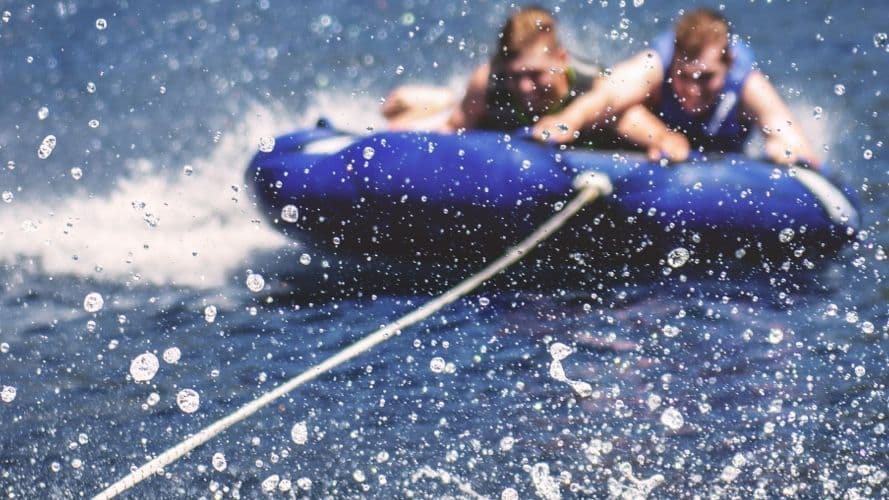
By the end of June the lowland cities have gone heavy and humid, and somewhere up on the plateau a lake is holding water a good deal cooler than anything the pavement can offer. Pennsylvania has been sending children toward that cooler water for a very long time, and a parent here tends to know it in the body before knowing it on paper: the loaded car, the road bending north into the pines, the handoff at a gate.
It is also a state where summer for a great many children never leaves the neighborhood, where camp is a school gym or a museum or a community center down the road and home again by dinner. Both are true at once, and neither cancels the other; the field is wide, and worth seeing whole before settling on any one corner of it.
What separates one camp from another here is less the county it sits in than the kind of thing it is and who stands behind it. The private overnight camps of the northern mountains, the day and specialty camps of the cities, the faith-rooted camps, and the camps run by long-standing civic organizations are different answers to the same summer, and each asks something different of a family. Terrain earns a mention in one honest place: the cool, forested, lake-scattered plateau within a morning's drive of the great metropolitan areas on either side is a real reason the overnight belt grew where it did. Elsewhere the landscape is backdrop, and a beautiful ridge is never on its own evidence that a camp is waiting on it.
Up where the lakes stay cold
The northeastern plateau, with its ridges and glacial lakes and long-settled camp properties, is where the state keeps its traditional sleepaway camps. These are the summer-long and multi-week places, wooded and lakefront, coed and single-sex, most of them privately run and tied to no faith. A child stays for weeks rather than days, and the days fill with the classic spread: waterfront, land sports, arts, the ropes course, the campfire at dark.
Many of these camps have been running for generations and carry the accreditation and the come-back-every-year rhythm that goes with that history. They draw from within the state but heavily from the big cities on either side, which is why a single cabin can hold children who arrived from very different lives.
What this form asks of a family is the real separation: a stretch of weeks, a drive that ends on a gravel road, and a summer measured in letters rather than phone calls. Families who choose it are usually choosing immersion and the particular loyalty that builds when the same child returns to the same lake across a childhood.
Close to home, and back by dinner
In the metropolitan areas and the smaller cities and boroughs between them, camp usually means the day kind. It runs out of school campuses and community centers, museums and university grounds, a week at a time, and it comes in broad flavors: the traditional day camp of swimming and sports and crafts, and the specialty camp built around one thing, whether that is robotics or theater or a single sport or a laboratory bench. Much of it is arranged around the working week, with care before and after the camp day itself.
The consequence here is the opposite of the mountains. Nothing is sent away and nowhere is far; the child is home each evening and the parent is reachable through the day. What a family weighs is not distance but fit, and the summer becomes a kind of patchwork, a week of one thing and then a week of another, assembled around the rest of a working life.
A week with faith at the center
A distinct and long-standing strand of Pennsylvania camp is built around Christian faith, found both on the northern plateau and in the southwestern highlands, on lake properties with chapels as well as dining halls. These are usually week-long residential or day camps that fold worship and Bible study into the ordinary run of swimming and hiking and crafts. Some belong to a single tradition and others are broadly ecumenical, and the faith frame is stated openly rather than tucked away.
For families to whom that frame matters, the choice is partly about the week and partly about the community the week belongs to, and the camp often reads as an extension of a congregation the family already keeps. The separation is real but usually brief, a week inside a familiar world rather than a season among strangers.
The camps a family belongs to
Alongside the private camps and the faith-based ones runs a quieter tradition: camp put on by long-standing civic organizations, the scouting councils with their reservations in the western ridges and the cooperative-extension programs that reach into nearly every county. These carry resident weeks and day weeks alike, themed adventures for the youngest and skills-and-advancement weeks for the older ones, and tracks that run to animals and making and the outdoors.
What sets these apart is that the camp is one node in a much longer year. A child usually belongs to the organization before the summer and after it, the handoff at drop-off is often to leaders the family already knows, and a place is joined through membership more than it is shopped for. The camp is less a destination than a season inside something the child was already part of.
Summer here is warm and humid, heaviest in the southeastern lowlands and lighter up on the plateau and in the western highlands, where elevation cools the days and genuinely cools the nights. Afternoon thunderstorms are a regular visitor and can pull a waterfront in early. The lakes are swimmable but run cool, and the mountain ones stay bracing well into the season, so swimming is real without ever being warm. Wooded camp country means ticks and mosquitoes and the daily habits that go with them, and the forests themselves are dense and green and leafy. The working camp season holds from the tail of June through August.
The parent's summer runs to both extremes at once. Send a child to the mountains and the distance is real, the contact loop is narrow and camp-mediated, and there is a visiting day and a long drive and a house that goes quiet. That the northern mountains happen to be vacation country means a visiting weekend has somewhere to stay, though that hospitality is built for tourists first and is best understood that way rather than as anything the camp provides. Keep a child at a day camp and there is no waiting town and no silence at all, only a morning drop-off and an ordinary evening. Many families live both versions in the same summer, one child up the mountain and another down the block.
For all the difference between a summer-long cabin on a cold lake and a week of robotics down the street, the camps of this state share a plainness of purpose. None of them is exotic; each is a well-worn way the state has worked out to hand a child a piece of summer, whether that piece is measured in weeks away or afternoons close by. The work is less about comparison than about recognizing which kind of summer a family is actually after. Those differences run along a few deep grooves that show up in camps everywhere, and the camp archetypes are a way to recognize the grooves before choosing among them.
None of this replaces the questions a family puts to a particular camp: what a week actually holds, how contact works, how a child gets there and back. The guide for parents is the part of the Field Guide built for exactly those questions, the ones that outlast any single state. It is the place to turn once the shape of the summer is clear and the practical work of choosing begins.